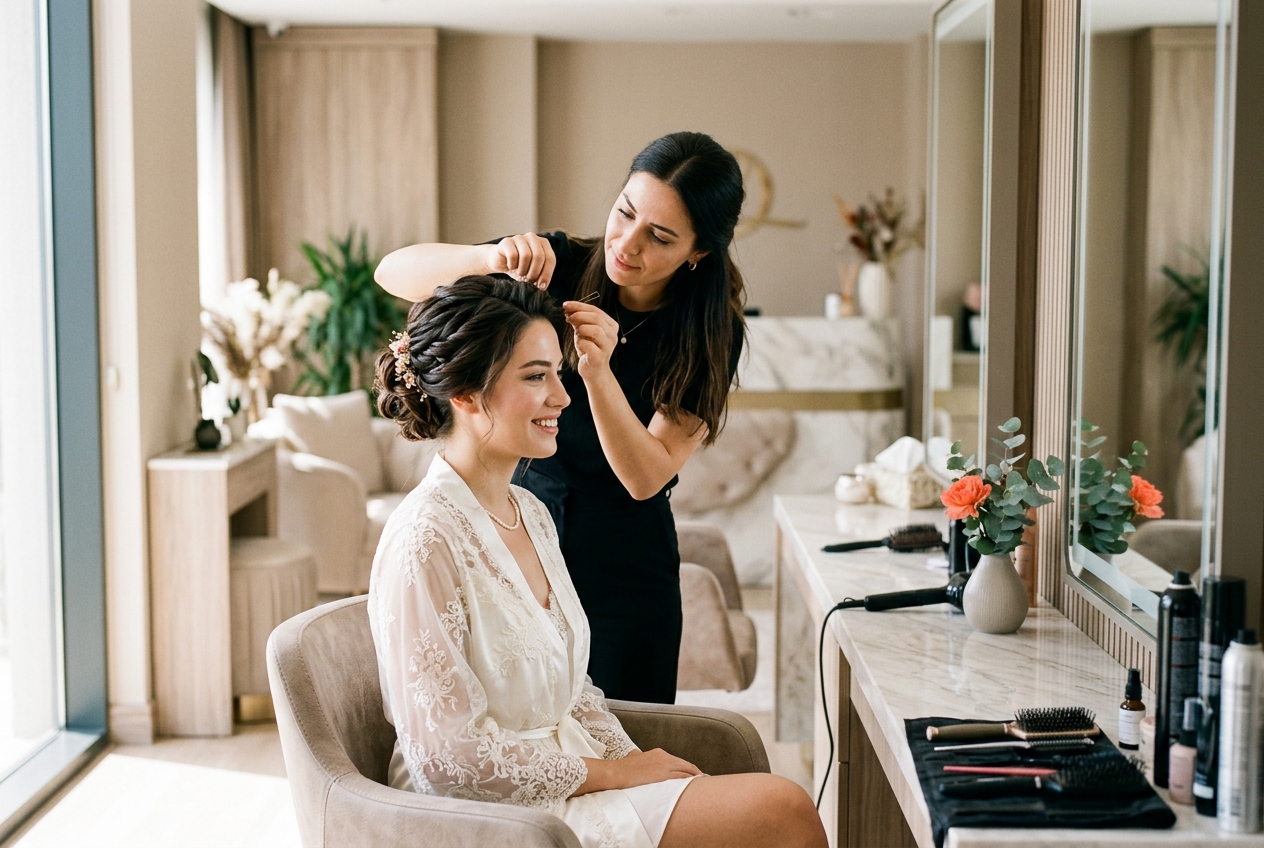
From May to September the same scene plays out over and over: it's eight in the morning and two brides are at the door at once, mothers, aunts and bridesmaids trailing behind them. One is barely out of her highlights before the next bride has sat down to wait, the phone won't stop ringing, and you're trying to swing three pairs of scissors at the same time. The salon seizes up, everyone gets tense, and you spend the rest of the day working as if you owe someone a debt.
The cause of this chaos usually isn't your talent or your speed. The cause is that bridal styling is a very different job from an ordinary appointment, and most salons put it on the calendar as if it were a regular one. In this article we'll treat bridal styling like an operation and build a concrete formula that prevents clashes from the start. No empty promises here, just tactics that work on the floor.
In an ordinary appointment the client arrives, gets the service, and leaves. With bridal styling the job doesn't end with one person. There's a trial, there's a long service on the wedding day, and more often than not the mother and the bridesmaid are waiting their turn in the same chair. So when you write down a single appointment, you're really scheduling a program for three or four people.
The second difference is duration. If a blow-dry is half an hour, bridal hair, veil fitting and final touch-ups easily add up to a comfortable two hours. If you write that down on paper as a one-hour appointment, you automatically push back everyone else's slot that day. A single bride running half an hour over delays the five appointments behind her all at once.
The third difference is commitment. If a normal client doesn't turn up, the day flows on; but if the bride you booked for a wedding morning fails to show or mixes up her time, that gap is almost impossible to fill. That's why it's essential to pin a bridal appointment to a solid promise and a clear plan.
The most overlooked part of bridal styling is the trial. The trial is what carries the stress of the wedding morning away weeks in advance. It's the day you calmly test how the bride's hair will hold, which updo suits her face, and where the veil will attach. Skip the trial and you're forced to try a look for the first time on the wedding morning, and that two-hour job stretches into three.
Book the trial separately from the wedding day, as its own appointment. Ideally a week or two before the wedding, on a day and time when the salon is relatively quiet. That way you don't run into any surprises on the wedding morning; you simply apply the look that was already approved. It also brings your time estimate much closer to reality.
During the trial, nail down the plan for the wedding morning with the bride too. What time she'll arrive, who'll be with her, hair first or makeup first, discuss all of it. That conversation alone erases half of the commotion that would otherwise happen at the door that morning.
The biggest cause of clashes is allowing too little time for a long service. If you open up one hour for bridal styling and line up other appointments right behind it, the first delay topples the whole day like dominoes. The solution is to set aside a block that matches how long the job actually takes, and to treat that block as sacred.
Time blocking means completely closing off that time range on the calendar for the bridal appointment. Say that after the trial this bride's job comes to two hours; then block not two hours, but two hours plus fifteen or twenty minutes of breathing room. That way a coffee, a bathroom break, a small hiccup or a photo stop doesn't wreck the day.
If you're taking a second bride the same morning, line the blocks up not on top of each other, but with a real gap between them. Booking two brides half an hour apart looks fine on paper but is a disaster on the floor. Two clear blocks that follow one another without overlapping let both you and the brides get through the day in peace.
Leaving a long, impossible-to-refill job like bridal styling on a verbal appointment is risky. The bride might switch to another salon at the last minute, mix up her time, or simply not come at all. If you've set that morning aside for her and she doesn't show, filling that gap is nearly impossible. This is exactly where a deposit comes in.
A deposit both makes the bride take her commitment seriously and secures the day for you. Because she has paid, she's committed to coming; and you can close that block with complete peace of mind. It's the most honest way to minimize the risk of a no-show, because it binds both sides without pressuring anyone.
The best time to discuss the deposit is when you're booking the trial. State the amount and the refund terms clearly up front; vagueness damages trust. Clarity is the very heart of a fair working relationship: the bride knows what she'll pay, and you know that morning is booked.
When a bride arrives, she usually doesn't come alone. The mother, mother-in-law, bridesmaids and sometimes small children all pour into the salon. This crowd both takes up space and unsettles the other clients waiting their turn. If you don't manage the crowd, it isn't the quality of your work that collapses, but your flow.
Discuss this with the bride during the trial too: find out in advance how many people are coming with her and whether they also want hair or makeup. If any of them do, book them as separate appointments in separate blocks; don't cram them all into the same moment. For those who are only there to accompany her, decide in advance where they'll sit so they don't occupy the styling chairs.
Map out the rhythm of that morning ahead of time, as well. Will the bride sit down first, will the mother start at another chair at the same time, who is going to wait for whom. This little bit of planning lets the crowd flow like an orderly queue rather than chaos. And when the bride's family sees that calm, they trust you even more.
Most delays are rooted in bad time estimates. Hastily assigning every bridal appointment the same duration is misleading; an updo on short hair doesn't take the same time as one on long, curly hair. The real duration you clocked during the trial is the most honest number for that bride.
On the trial day, note how long the service takes. Next time, open the block for that bride, or for another bride with a similar hair type, based on it. Over time you build up experience full of real data, and your estimates become accurate. This is the quiet secret behind a salon staying on time all season long.
A clear calendar makes the job easier here. When you can see at a glance when each block begins and ends, you can decide in a second whether you can fit a second bride into the same morning. Your mind is at ease, the time you give the brides matches reality, and no one waits for nothing.
Yes, as long as you know the true duration of each one and leave enough of a gap between them. Book the two brides back to back in clear, separate blocks rather than side by side, and add breathing room at the end of every block. If you set the time based on real data from the trial, the risk of a clash almost disappears.
Technically you can, but trying a look for the first time on the wedding morning seriously increases both stress and time. A trial locks in the style in advance and turns that morning into pure execution. It also lets you measure the real duration, which helps you open your later blocks accurately.
If you discuss the terms clearly up front, it does the opposite and builds trust. The bride knows what she'll pay and the refund policy; you lock down a morning that's impossible to refill. A deposit isn't pressure, it's an honest agreement in which both sides take their commitment seriously.
Discuss it during the trial. Find out how many people are coming and who wants a service; book those relatives who want a service into separate blocks at separate times. Assign seating for the ones who are only there to accompany her, so they don't take up styling chairs. Mapping out the order of that morning in advance brings the crowd into line.
Note the real duration of the service during the trial and open your next blocks based on that data. Short hair and long hair, straight hair and curly hair don't take the same time; assess every bride by her own hair type. Over time, with real data building up, your estimates stop being guesses and turn into an accurate plan.
With SalonSync you time-block your long services, lock in the promise with a deposit, and see at a glance how many brides you can fit into a single morning with a clear calendar. Early access is free, flat pricing, 0% commission.