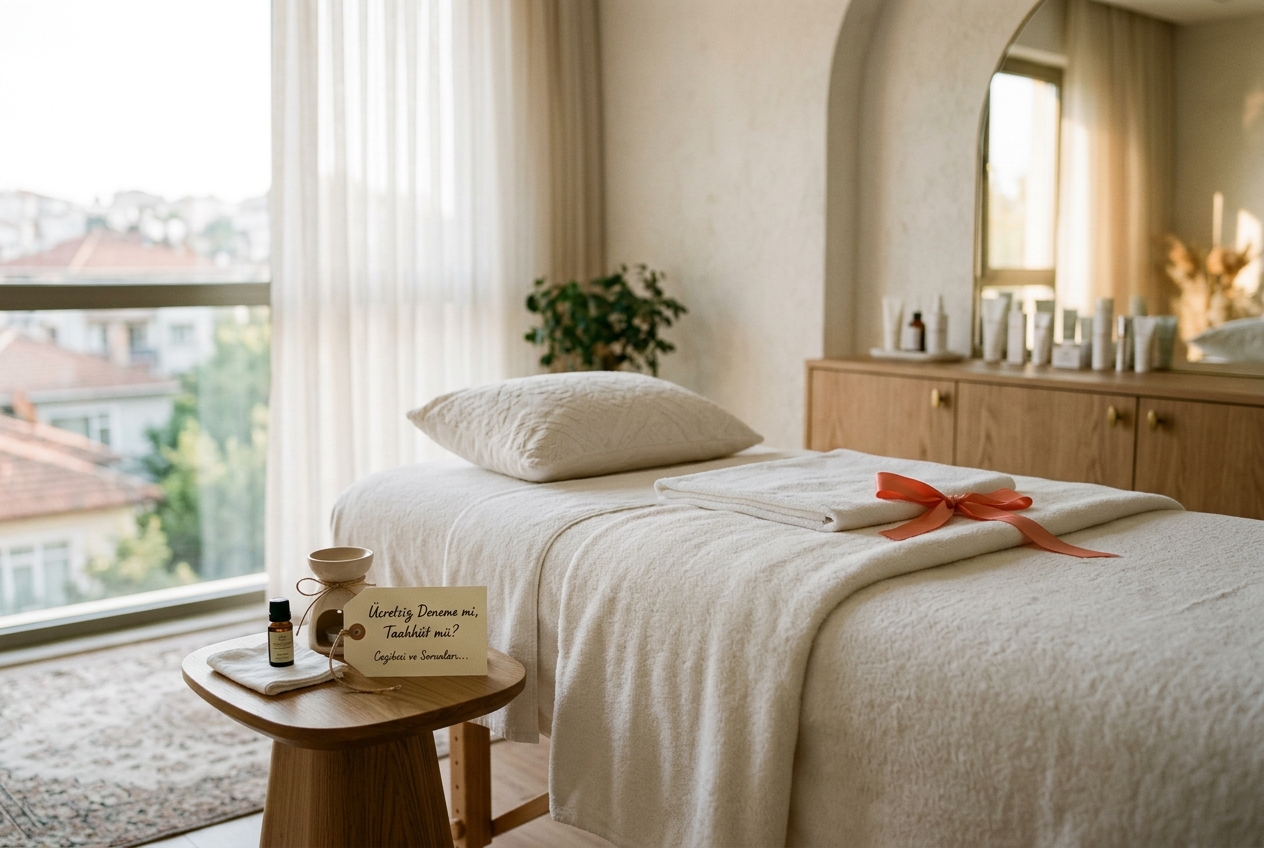
You see a post on Instagram: the salon down the road is shouting "first facial free." Their phone seems to be ringing off the hook. And you start to wonder: "Should I do the same? Am I missing out?" Stop right there. This article was written for exactly that moment. A free trial session sometimes works, but far more often it quietly drains money from your pocket. We're going to figure out which one it is with math, not emotion.
The goal isn't to sour you on campaigns. The goal is to help you tell which campaign actually puts money in your till and which one just makes your chairs look busy while running you a loss. Grab a pen and paper, or the calculator on your phone, and let's begin.
When you make a service completely free, two very different people walk through your door. The first is a genuine prospect — someone curious about your work who intends to keep coming if they're happy. The second comes only for the word "free" and won't call you again until the next freebie. The problem is that these two arrive looking identical; you only find out which is which after the session is over.
By its very nature, a free service attracts the second group in disproportionate numbers. That's because the "free" filter doesn't measure intent — it measures price sensitivity. You end up drawing in the most price-sensitive crowd, which is exactly the crowd least likely to become loyal clients. And here's the bitter part: the campaign you pour the most effort into brings you the people with the least commitment.
Don't read this as "free is always bad." In some cases it's smart, and we'll separate those out with numbers in a moment. But first you need to see the scale of the potential loss.
Most owners see a free session as "the chair's empty anyway, what's the harm?" But the cost of a free session is never zero. Fill in these line items with your own numbers:
Let's reason through an example (the numbers vary by sector, so plug in your own real figures): say a single free session costs you a certain total once you add product + staff time + lost revenue. You gave away 20 free sessions. How many of them came back a second time and paid? If your answer is "I'm not sure," that right there is the real problem: if you're not measuring, you're not running a campaign — you're gambling.
There is only one thing that determines whether a campaign worked: how many people became paying clients? This is your conversion rate. The logic of a free session is simple — you have to weigh the cost of the free service against the total money that person spends with you afterwards.
Think of it this way: say one free session costs a moderate amount. If that client comes back, buys a few paid sessions and becomes a regular, that free session turns into your most profitable investment. But if most of the people who came never return, every free session goes straight into the loss column. The critical threshold is whether a large enough share of your freebie visitors convert into paying clients. If you don't know that rate, continuing the campaign is like rowing in the dark.
The core message is clear: the free-session decision isn't the question "am I generous?" — it's the question "what's my conversion rate?" And you can only know that rate if you record and track every single client the campaign brings in.
Let's be fair: a free trial isn't always a trap. Under certain conditions it's a smart investment. Here's when it works:
Notice the common thread: a free trial only works when it's limited, targeted and trackable. The open-ended "come one, come all" free campaign is almost always a trap.
Here's the good news: free isn't the only way to attract new clients. In fact, in most cases these three models bring in both more quality clients and less loss than a free session does.
The shared advantage of all these models is that they filter for a crowd that comes with genuine intent, not price sensitivity. A free campaign opens the door to everyone; these models open the door to the right person.
Whether you run a free trial, a discounted first session or a referral campaign, they all live or die by one thing: can you record the person the campaign brought in and get them back? The real job of a campaign isn't to bring the first visit — it's to secure the second. If the second visit never comes, no campaign turns a profit.
This is exactly where SalonSync makes life easier. It records every client who comes from a campaign with a single tap and notes which campaign they came from. Then you can track who never returned and who became a regular — not by guesswork, but by seeing it right on screen. So you answer "did the free session work?" with real numbers instead of a gut feeling.
Better still, reminding a client who went quiet after the first session and suggesting their next appointment runs from the same system. A campaign is just a door; the real profit is in bringing back whoever walked through it. With 0% commission, flat pricing and a free plan, SalonSync helps you set up that tracking from the very start — and it's free to try in early access.
There's no hard rule, but in most cases a small symbolic fee or a clearly discounted first session is healthier than something completely free. A client who pays even a little converts into a regular at a far higher rate than a crowd chasing freebies. For a new opening, or for services with high repeat potential, a limited and tracked free trial can still make sense.
It's never just supplies. It's the product cost + the lost revenue from not booking a paying client into that slot + staff time + the expense of advertising the campaign. That's why the "the chair was empty anyway" argument is misleading; even a seemingly empty chair carries an opportunity cost.
The only real measure is your conversion rate: how many people from the campaign became paying, regular clients afterwards? To know that, you have to record every new client, note which campaign brought them in, and track whether they come back. If you're not measuring, you're guessing, not running a campaign.
The three that work most often: a clearly discounted first session, a discounted multi-session package, and a refer-a-friend campaign. All three filter for a crowd that comes with genuine intent rather than price sensitivity, so their conversion rates are usually higher than a free campaign's.
It records every client who comes from a campaign, tags which campaign they came from, and lets you see on screen who returned and who turned into a regular. Reminding a client who went quiet after the first session runs from the same system. With 0% commission, flat pricing and a free plan, it's free to try in early access.
With SalonSync, record every client a campaign brings in and track conversion with real numbers. 0% commission, flat pricing, free plan — early access is open now.