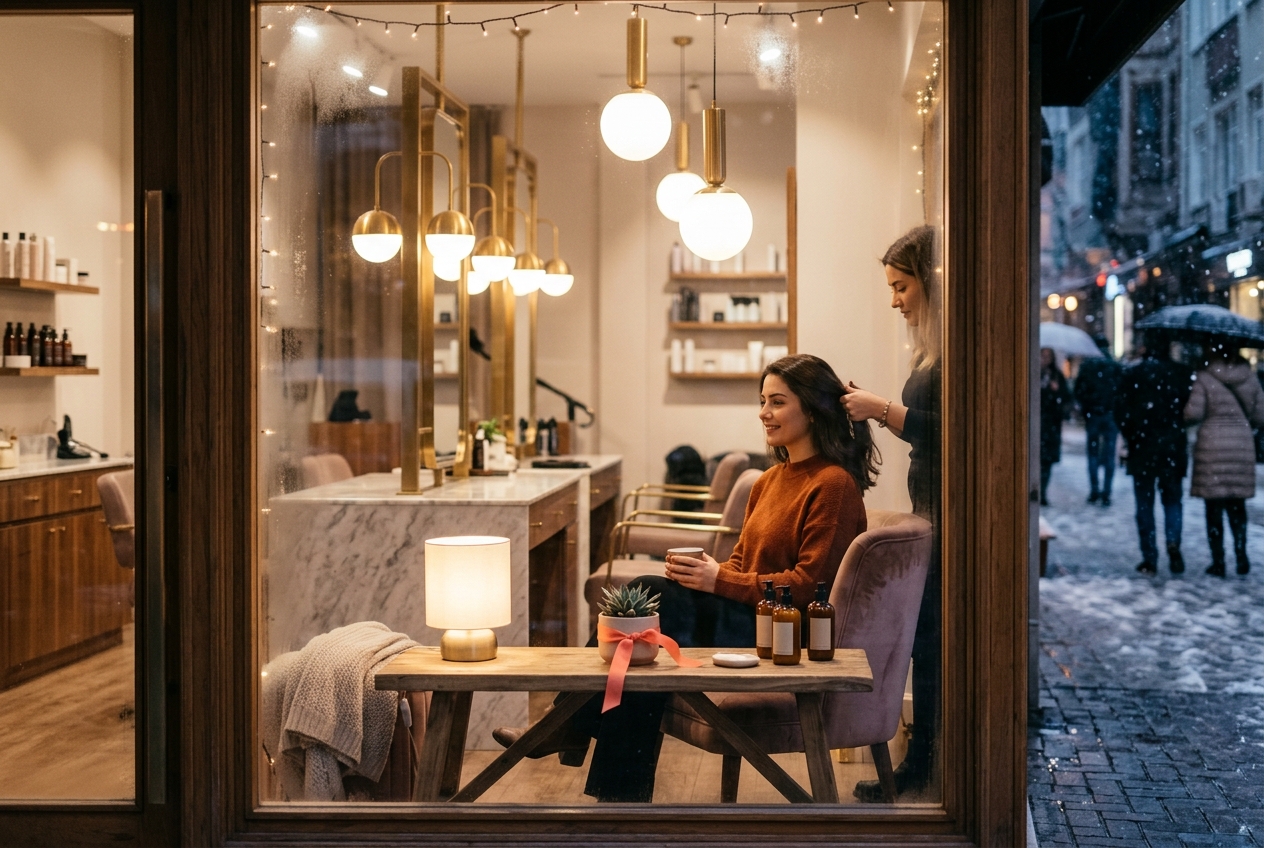
When November rolls around, a hush settles over the salon. The summer wedding rush is over, the holiday crowds are behind you, and the white gaps in your calendar start to multiply. One client on a Tuesday afternoon, an empty chair on a Wednesday morning… If that picture feels familiar, you're not alone. The winter dip in revenue is the beauty industry's best-known — yet least-talked-about — reality.
The first fix that comes to mind is usually the same: a 50% OFF sign in the window. But that costs you more than you think. Once a client comes in for the cheap price, they vanish the moment prices go back to normal. Worse, even your loyal clients start thinking, "So you were overcharging me all along." The good news: you can fill those empty chairs without cheapening your brand. Here are three smart, winter-ready campaign models.
Panic-discounting in the slow season is like stopping a haemorrhage with a plaster. A little money comes in that month, but the habit is broken. Clients now expect to come at full price only on sale, and they spend the next season waiting for a discount too. In the end, you've trimmed your own profit with your own hands.
Here's the real issue: the winter problem isn't "the client has no money," it's "the client has no reason to come in." In summer a wedding, a holiday or a special occasion pushes people toward the salon. In winter that trigger disappears. So your job isn't to drop the price — it's to create a fresh reason to come in. The three models below do exactly that: they add value without cutting price.
Your biggest headache in winter is the unevenness of your cash flow. This is exactly where the logic of packages and subscriptions kicks in: you take payment up front from the client and, in return, lock in several sessions. That way money comes into the till today, and that client is tied to your calendar for the next two or three months.
For example, you could set up "buy 4 facials, the 5th is on us," or a winter subscription with a fixed monthly fee for "one treatment + one manicure every month." The trick here isn't discounting; it's increasing the total value. The client feels they're buying a care routine, not a single session. And since dry skin and damaged hair naturally get worse in winter, these packages make perfect sense to them.
The key is being able to track who bought a package and how many sessions they have left. Without a client record in hand, it's impossible to remember that someone "has 3 sessions left." In SalonSync, each client's package and remaining session count are stored on their card; you can see whose final session is coming up and call them back in at just the right time.
Winter is also gift season: New Year, Valentine's Day, birthdays… People spend this stretch agonizing over "what should I buy?" This is exactly where the gift card comes in. Your happy existing client gifts your salon to someone close to them; you meet a new client without spending a penny on ads. On top of that, the gift card's money lands in your till today, while the service falls on some quiet day down the road.
Cross-selling is the silent hero of this season, too. Suggesting a brow treatment to a client in for a manicure, or a nourishing mask to someone in for a haircut… This isn't forcing something on the client; it's reminding them of a service they already need but hadn't thought of. A single, well-timed suggestion visibly lifts that day's revenue.
Here, too, what makes the difference is knowing your client. If you know which service they've had in the past and when they last came in, you can make the suggestion land. Thanks to the client card in SalonSync, you spot opportunities like "this client always colors their hair but has never had a treatment," and base your cross-selling on data rather than guesswork.
Your salon has a truth to it: some hours are always packed, others are always empty. On Saturday afternoon people wait in line, while on Tuesday morning your staff are sipping tea. The quiet-hours campaign targets exactly this imbalance. Instead of a blanket discount, you offer a small perk reserved only for those dead hours.
For example, "a tea or coffee plus a short hand massage on treatments booked weekdays between 10:00 and 13:00," or a small gesture just for those calm hours. Note: here, too, you don't have to slash the price. For the flexible worker, the parent whose kids are at school, or the retiree, what's genuinely appealing often isn't a discount but a calm, relaxed salon experience. The client who dislikes crowds loves these hours.
For this campaign to work, you need to see clearly which hours are actually empty. Rather than a hunch of "Tuesdays feel quiet, I think," you should look at the occupancy rate in your calendar. In the SalonSync booking calendar, which hour of which day sits consistently empty is visible at a glance; you build your campaign not on guesswork, but on your salon's real gaps.
Even the brightest campaign goes to waste if it reaches the wrong person. The "same message for everyone" approach is both exhausting and ineffective. The real power lies in aiming your campaign at the right client group. A "we've missed you" message to a client who came once three months ago and never returned; a "just for you" thank-you gesture to a loyal client — these land far better.
To do that, you need well-organized client records in hand. When who came in when, and what they last had, is recorded, you aim your campaign at a handful of the right people and waste neither your budget nor your effort. SalonSync's client tracking exists for exactly this: it groups clients by their past appointments and makes it easy to send your winter campaign straight to target. The fastest way to fill empty chairs runs through winning back the client who already knows you but hasn't been in for a while.
You don't have to avoid them completely, but don't make discounts your first and only weapon. A big percentage-off sign slapped on the door in a panic cheapens your brand and trains clients not to come at full price. Instead, try value-adding models like packages, gift cards and quiet hours; use a discount only sparingly and toward a specific, targeted goal.
What relieves your cash flow fastest is usually a prepaid package or a gift card, because the money hits the till before the service is even delivered. To fill empty chairs, the quickest route is to win back an existing client who hasn't been in for a while with a targeted message; that's both cheaper and easier than finding a brand-new client.
You can, but the impact will be limited. Without knowing who came in when, and who's loyal versus who's drifting away, you can't aim the campaign at the right person. Steady client tracking turns your campaign from guesswork into precision; that's why tidying up your client records before the slow season hits is the most profitable first step you can take.
Quite the opposite — because it uses hours that are already empty, it adds no extra load. You simply turn the calm hours when your staff are sipping tea into productive time. The key is to build the campaign around hours that are genuinely quiet; if you pin that down by looking at your calendar occupancy, neither you nor your staff end up under pressure.
With SalonSync's client tracking and booking calendar, see your empty slots and aim your campaign at the right client. 0% commission, flat pricing, a free plan. Join early access today.