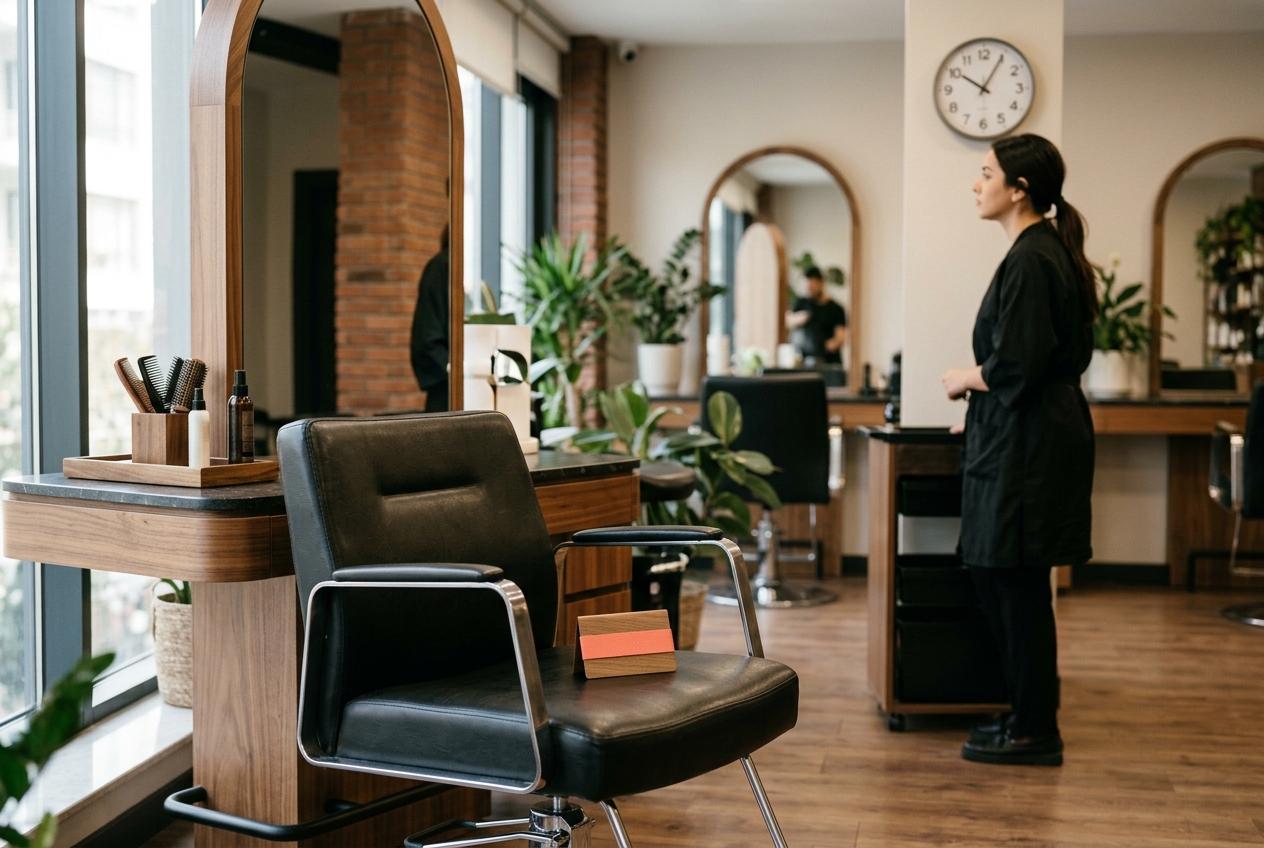
Few things sting more than an empty chair during what should have been a fully booked afternoon. A client who doesn't show up isn't just a small inconvenience, it's lost income, a stylist standing idle, and a slot you could have given to someone on your waitlist. Do the math across a busy month and no-shows quietly become one of the biggest leaks in a salon's revenue.
The good news is that no-shows are one of the most fixable problems in the business. Most clients don't skip appointments out of disrespect; they forget, life gets in the way, or rebooking feels like too much hassle. Fix the friction and the forgetting, and you'll watch your no-show rate drop. Here are seven practical tactics you can start using this week, most of them without any awkward conversations.
The single biggest cause of no-shows is simply forgetting. Someone books three weeks out, life happens, and the appointment slips their mind. Automated reminders solve this before it becomes a problem, and they cost you nothing once they're set up.
A reliable rhythm is a confirmation right after booking, a reminder 24 to 48 hours before, and a final nudge a few hours ahead on the day. SMS and WhatsApp both work well because people actually open them, unlike email that sits unread. With SalonSync, these reminders send themselves based on your booking calendar, so no one on your team has to remember to text anyone.
Keep the message short, friendly, and specific. Include the date, time, service, and stylist so there's no ambiguity.
A lot of no-shows aren't people who decided not to come, they're people who couldn't easily tell you they needed a different time. If changing an appointment means calling during business hours and hoping someone picks up, plenty of clients will just not show instead.
Give clients a one-tap way to confirm, and an equally easy way to reschedule. When they can move their appointment themselves in a few seconds, they'll do it, and that freed-up slot goes back into your calendar where you can fill it. A self-service booking page that clients can access anytime removes the friction entirely.
The goal is simple: never make a client choose between an awkward phone call and ghosting you.
For longer or pricier services like color, extensions, or bridal work, a small deposit or a card on file changes the psychology completely. When a client has something at stake, showing up (or giving you proper notice) suddenly matters more.
You don't need to charge everyone. Many salons reserve deposits for first-time clients, long appointments, or those slots you can't easily refill. A deposit of even 20 to 30 percent of the service, applied toward the final bill, is usually enough to signal commitment without scaring people off.
Be transparent about it. When clients understand a deposit protects a stylist's time and gets refunded against their service, most see it as completely fair.
Even with every tactic in place, some cancellations are unavoidable. A waitlist turns those gaps from lost revenue into a quick win. When a slot opens up, the next client in line gets offered it automatically, and your chair stays busy.
Popular time slots (evenings and weekends) fill fast and cancel late, which is exactly when a waitlist earns its keep. Instead of scrambling to text regulars one by one, an automated waitlist reaches out the moment something frees up.
This also softens the sting of no-shows overall. When you know a cancellation can be backfilled in minutes, a single missed appointment stops feeling like a wasted afternoon.
Clients respect boundaries they actually know about. A simple, visible cancellation and no-show policy sets expectations up front and gives you a fair basis for follow-up when someone repeatedly misses appointments.
Keep it human. A policy like "Please give us 24 hours' notice to cancel or reschedule so we can offer your slot to another client" reads as reasonable, not punitive. State it on your booking page, in your confirmation message, and in reminders so no one is surprised.
The point isn't to punish people, it's to gently remind everyone that their appointment holds real value and a real person's time.
How you handle a no-show shapes whether that client ever comes back. Skip the guilt trip. A warm, no-pressure follow-up keeps the door open and often wins back someone who was simply embarrassed to reach out.
Something as light as "Hi Jordan, we missed you today! No worries at all, life happens. Want to grab a new time this week?" turns an awkward moment into a rebooking. You'd be surprised how many missed clients quietly return when the follow-up feels kind rather than cold.
Automating this follow-up means it actually happens every time, instead of getting lost in the rush of a busy day.
Most clients who miss an appointment do it once and never again. But a small handful will no-show repeatedly, and those are the ones worth watching. Good client records let you spot patterns instead of relying on memory.
When someone racks up multiple no-shows, you can quietly adjust how you handle them: require a deposit for their next booking, ask for a card on file, or offer them only same-week slots. It's not about blacklisting anyone, it's about protecting your calendar from predictable losses.
A client CRM that logs booking history and no-shows automatically makes this effortless. You get the full picture at a glance, so decisions are based on facts, not gut feeling.
It varies widely by location and clientele, so there's no single benchmark worth quoting. What matters more is your own trend: track your no-show rate over a few months and watch whether the tactics above move it in the right direction. Even a modest drop in missed appointments adds up to real money over a year.
When deposits are reasonable, clearly explained, and applied toward the final bill, most clients see them as fair, especially for longer or high-value services. The key is transparency at the point of booking. Reserve deposits for the appointments most costly to lose rather than applying them to every single booking.
SMS and WhatsApp tend to get opened far more reliably than email, which often goes unread. Many salons use a mix: a confirmation and reminders by text or WhatsApp for immediacy, with email as an optional extra. Whatever channel you choose, consistency and a friendly tone matter more than the platform itself.
Two to three well-timed reminders usually hit the sweet spot: a confirmation at booking, a nudge 24 to 48 hours before, and an optional same-day reminder. Beyond that you risk annoying clients. The aim is helpful, not spammy, so keep each message short and easy to act on.
SalonSync brings automated reminders, easy rescheduling, deposits, a waitlist, and client history together in one place, with 0% commission and flat pricing. Start free with early access and watch your no-shows shrink.